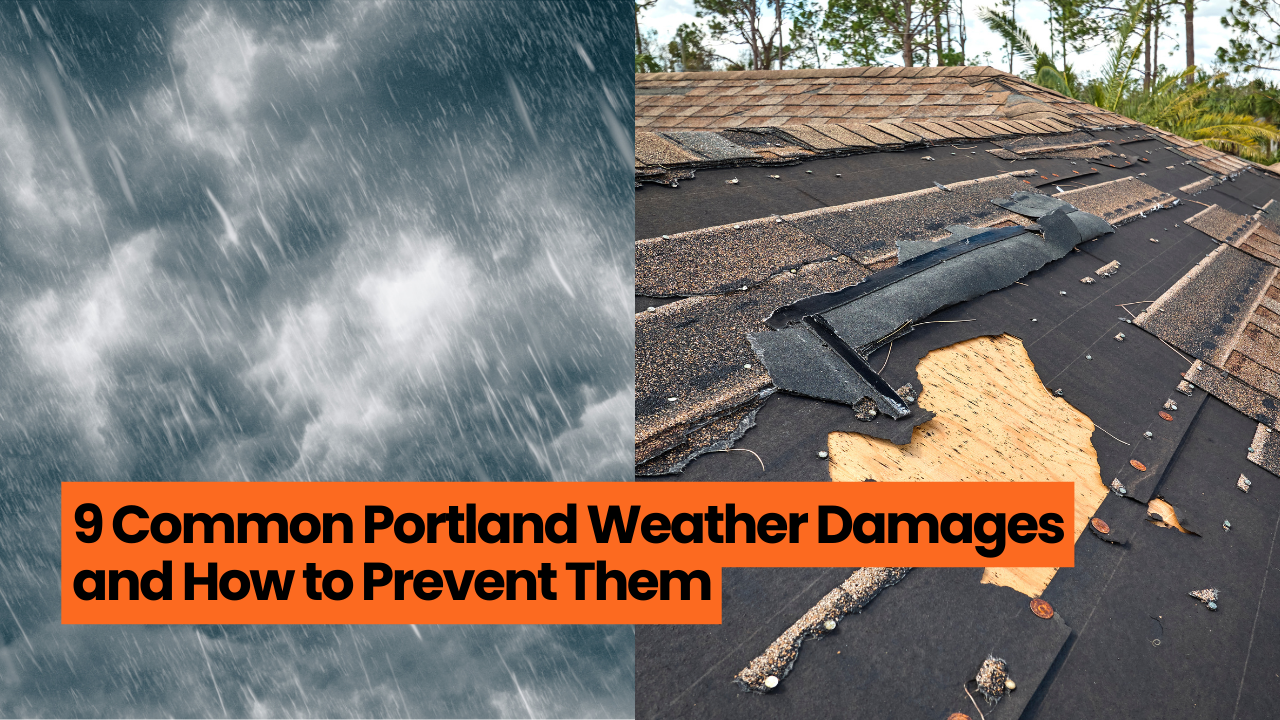
Portland’s Weather And Your Roof
Portland’s long rainy season, occasional snow, and wind storms can wear down even a newer roof faster than many homeowners realize. Understanding how local weather affects your roof helps you spot problems early and avoid expensive emergency roof repair.
Common issues include slow leaks, damaged shingles, and weakened flashing that let water into your home over time.

1. Heavy Rain And Slow Roof Leaks
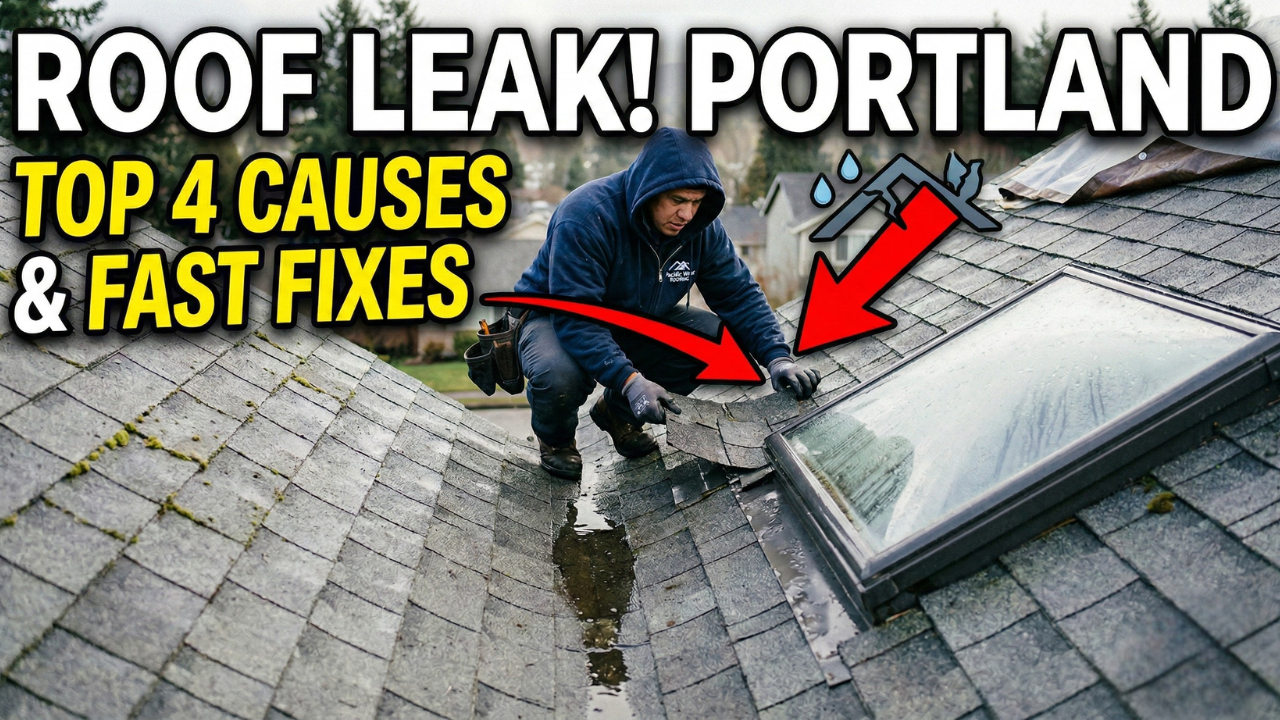
Persistent Northwest rain can turn a tiny gap in your roof into a major leak that stains ceilings, soaks insulation, and encourages mold growth. Often, these leaks start small around penetrations like vents, chimneys, and skylights.
To help prevent rain‑related roof damage:
- Schedule annual roof inspections before and after the rainy season.
- Seal and maintain flashing around chimneys, vents, and skylights.
- Call a professional roof repair company at the first sign of water stains on ceilings or walls.
2. Wind Damage To Shingles
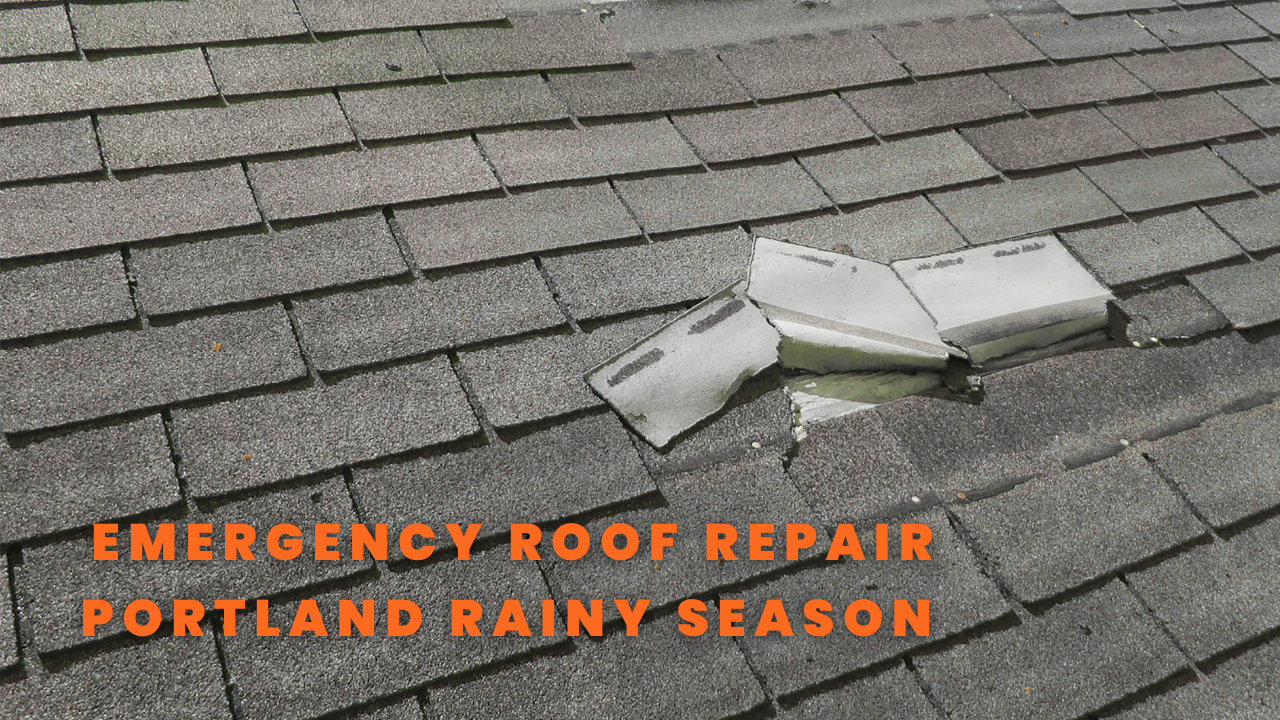
Seasonal wind storms in Portland can lift, crack, or completely tear off asphalt shingles, leaving the underlayment exposed. Once the protective surface is compromised, rainwater can work its way into the roof deck.
Prevention tips:
- After strong winds, walk your property and look for missing or curled shingles.
- Trim back overhanging branches that can scrape and lift shingles.
- Have a roofing contractor replace damaged shingles quickly to prevent leaks.
3. Moss And Algae Growth
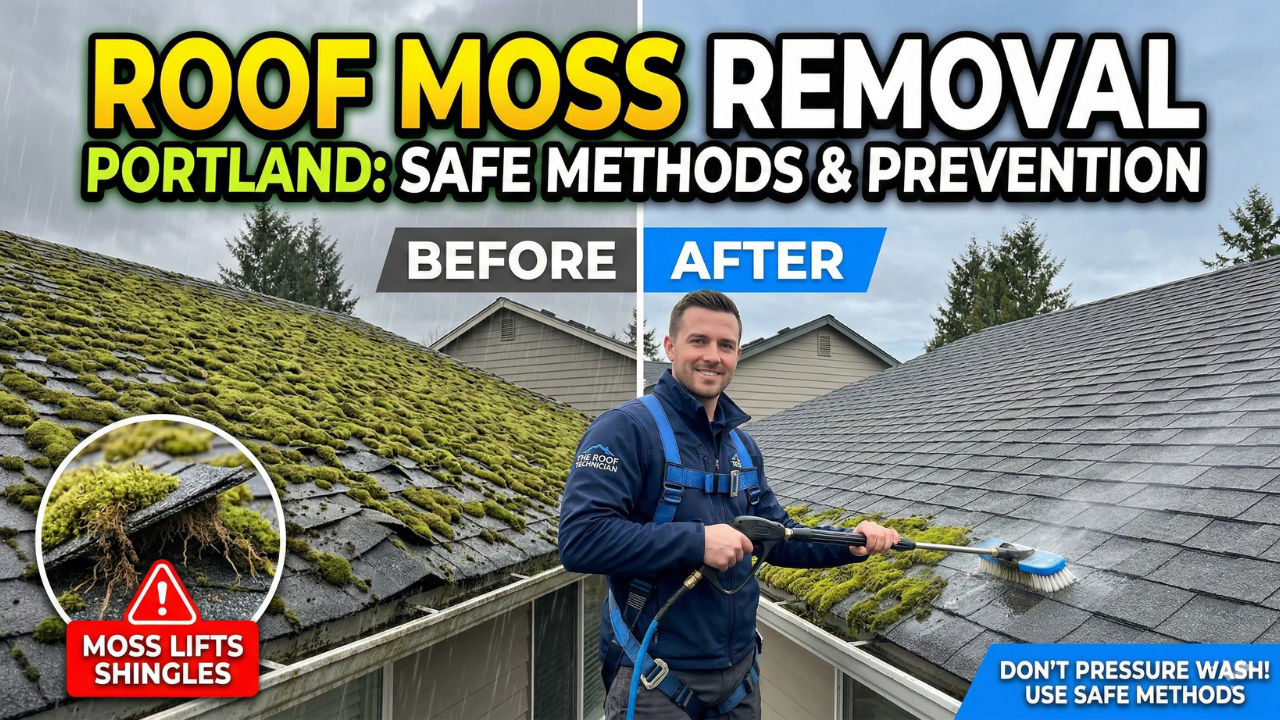
Portland’s damp, shaded environments are perfect for moss and algae growth on roofs, especially on north‑facing slopes. Moss can lift shingles, trap moisture, and speed up roof deterioration.
Reduce moss‑related roof repair issues by:
- Gently cleaning moss with approved methods, never using harsh pressure washing.
- Installing zinc or copper strips near the ridge to discourage growth.
- Improving sunlight and airflow by trimming nearby trees.
4. Clogged Gutters And Ice Dams
When gutters fill with leaves and debris, water backs up and can seep under shingles or overflow against siding. In cold snaps, trapped water can freeze and contribute to ice dams along the roof edge.
Protect your roof by:
- Cleaning gutters at least twice a year, especially in fall.
- Ensuring downspouts are clear and draining away from the foundation.
- Considering gutter guards if trees surround your Portland home.
5. Snow, Ice, And Freeze–Thaw Cycles
While Portland doesn’t see heavy snow all winter, periodic snow and freezing rain can still stress your roofing system. Melting and refreezing cycles allow water to creep into tiny cracks and expand them over time.
Prevention strategies:
- Make sure your attic is well insulated and ventilated to reduce ice dam formation.
- Avoid aggressive roof raking that can damage shingles.
- Have a professional inspect the roof after major winter events to catch hidden damage early.
6. UV Sun Damage In Dry Spells
After long stretches of rain, Portland can experience bright, sunny periods that expose roofs to UV radiation. Over time, UV rays dry out asphalt shingles, making them brittle and more prone to cracking and granule loss.
Limit UV‑related wear by:
- Choosing high‑quality, UV‑resistant shingles when it’s time for roof replacement.
- Scheduling periodic inspections for aging roofs to monitor granule loss.
- Addressing small cracks or exposed underlayment quickly with professional roof repair.
7. Thermal Expansion And Contraction
Frequent temperature swings cause roofing materials and flashing to expand and contract, potentially loosening fasteners and creating gaps. This movement can open pathways for water intrusion, especially around joints and seams.
Prevention steps:
- Have flashing, fasteners, and sealants checked regularly by a roofing professional.
- Use quality materials designed for the Pacific Northwest climate.
- Replace aging caulking and sealant before it fails completely.
8. Tree And Debris Damage
Branches, pine needles, and leaves are common roof hazards in tree‑lined Portland neighborhoods. Branches can scrape shingle surfaces while piles of debris hold moisture against the roof and accelerate rot.
Reduce debris‑related roof repair needs by:
- Trimming trees so branches do not touch or hang directly over the roof.
- Clearing roof surfaces and valleys of leaves and needles, especially after storms.
- Checking for punctures or impact damage after large limbs fall.
9. Aging Roof Materials
Even with great maintenance, every roof eventually reaches the end of its service life. Older shingles lose protective granules, curl at the edges, and crack, making leaks far more likely.
To manage age‑related damage:
- Know the approximate age and material of your roof.
- Plan ahead for roof replacement before chronic leaks develop.
- Use professional inspections to determine if targeted roof repair or full replacement is more cost‑effective.
When To Call For Professional Roof Repair In Portland
Some small issues can be monitored, but Portland homeowners should not delay calling a roofing contractor when leaks or visible damage appear. Fast action reduces interior damage and keeps overall repair costs lower.
Call a professional roof repair service immediately if you notice:
- Active dripping or ceiling sagging during or after rain.
- Multiple missing, broken, or curling shingles.
- Moldy smells in the attic or visible mold on roof sheathing.
FAQs About Roof Repair In Portland
1. How often should I have my roof inspected in Portland?
Most Portland homes benefit from a professional roof inspection at least once a year, ideally before the heavy rainy season. Older roofs or homes surrounded by trees may need inspections twice a year.
2. How do I know if I need roof repair or full replacement?
If damage is limited to a small area and the roof is relatively young, targeted roof repair can be sufficient. Widespread shingle failure, recurring leaks, or an aging roof may indicate it is time for replacement.
3. Can I repair my roof myself?
Minor tasks like clearing debris and cleaning gutters are reasonable for many homeowners, but shingle and flashing repairs are best left to licensed roofing professionals for safety and warranty reasons. Improper DIY work can void warranties and cause more damage.
4. What should I do first if my roof suddenly leaks during a storm?
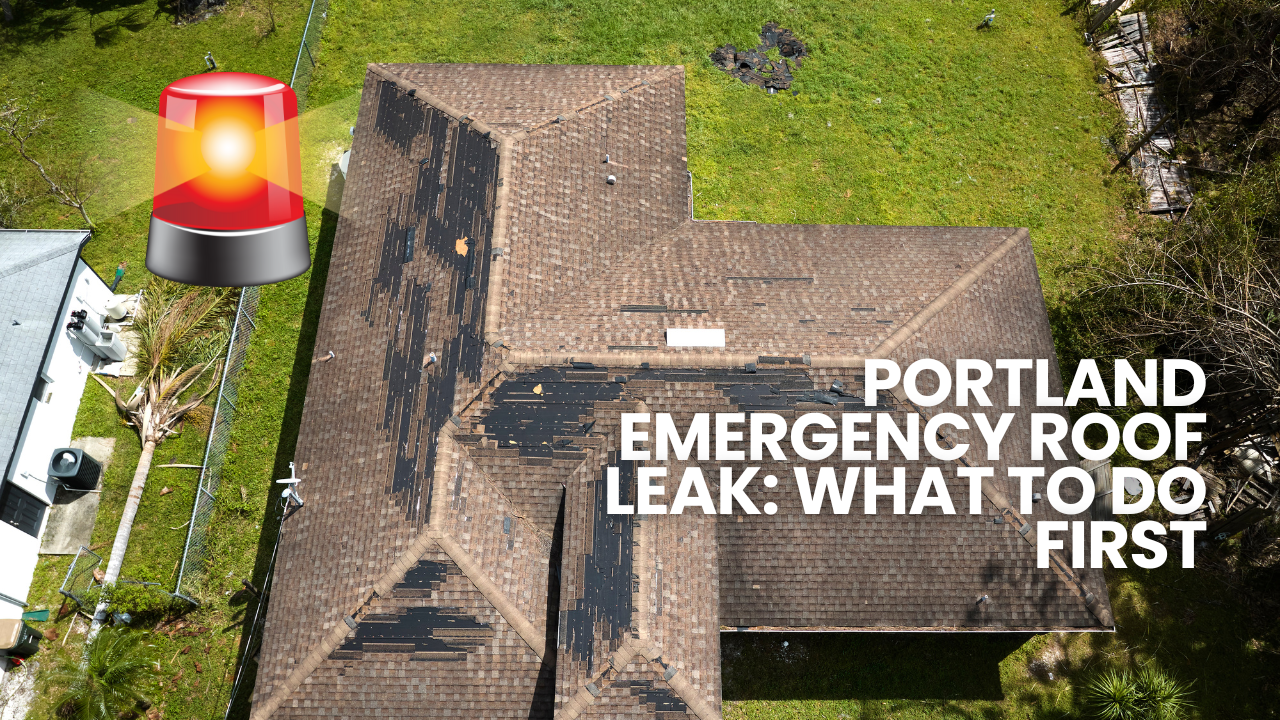
Place buckets or containers under active drips, move belongings away from the leak, and cover valuables with plastic if needed. Then contact a local emergency roof repair service as soon as possible.
5. How long does a typical roof repair take?
Many common roof repairs can be completed in a single day, depending on the extent of the damage and weather conditions. Larger structural repairs or extensive rot may take longer.
Ready To Protect Your Portland Home? Call Certified Roofing Services
Portland weather will keep testing your roof, but you do not have to wait for a major leak to act. Proactive roof repair and maintenance today can prevent costly interior damage tomorrow.
If you see signs of leaks, missing shingles, or storm damage, contact Certified Roofing Services Portland for fast, professional roof repair and honest recommendations for your home. Call now or request an inspection online to keep your roof strong, dry, and ready for the next storm.